This page is currently shown in English. Localized content for Español · Filipino · हिंदी · 中文 is coming soon.

The Talent Pack: Your Global Crew Hiring Partner

Crew Hiring, Charted by Compass.

Compass, our AI recruitment engine, is plotting the fastest, fairest course from application to embarkation for Hotel and Entertainment crew, worldwide. Launching soon.

Cruise careers are living experiences. Choosing the right person requires human insight, emotional intelligence and lived experience, supported by Compass AI's data-driven accuracy.

Join the Crew List ⚓

Your Cruise Career

Your APAC Gateway To A Cruise Career

The Talent Pack is your APAC gateway to a cruise career. We recruit candidates from any nationality, giving everyone a clear, supported path into shipboard roles.

APAC Talent Hubs

Connecting candidates from any nationality into shipboard careers worldwide.

Your journey begins through our APAC hubs: Australia, Indonesia and New Zealand, where you receive structured guidance, real human support and a pathway that feels achievable from application to embarkation.

  • Australia
  • Indonesia
  • New Zealand

If your passport country requires processing through an authorised Cruise Hiring Partner outside TTP regions, we hand you directly to the correct agency or cruise partner. This keeps your experience compliant, safe and seamless, no matter where you're from.

Diversity & Inclusion

One Fleet. Every Flag.

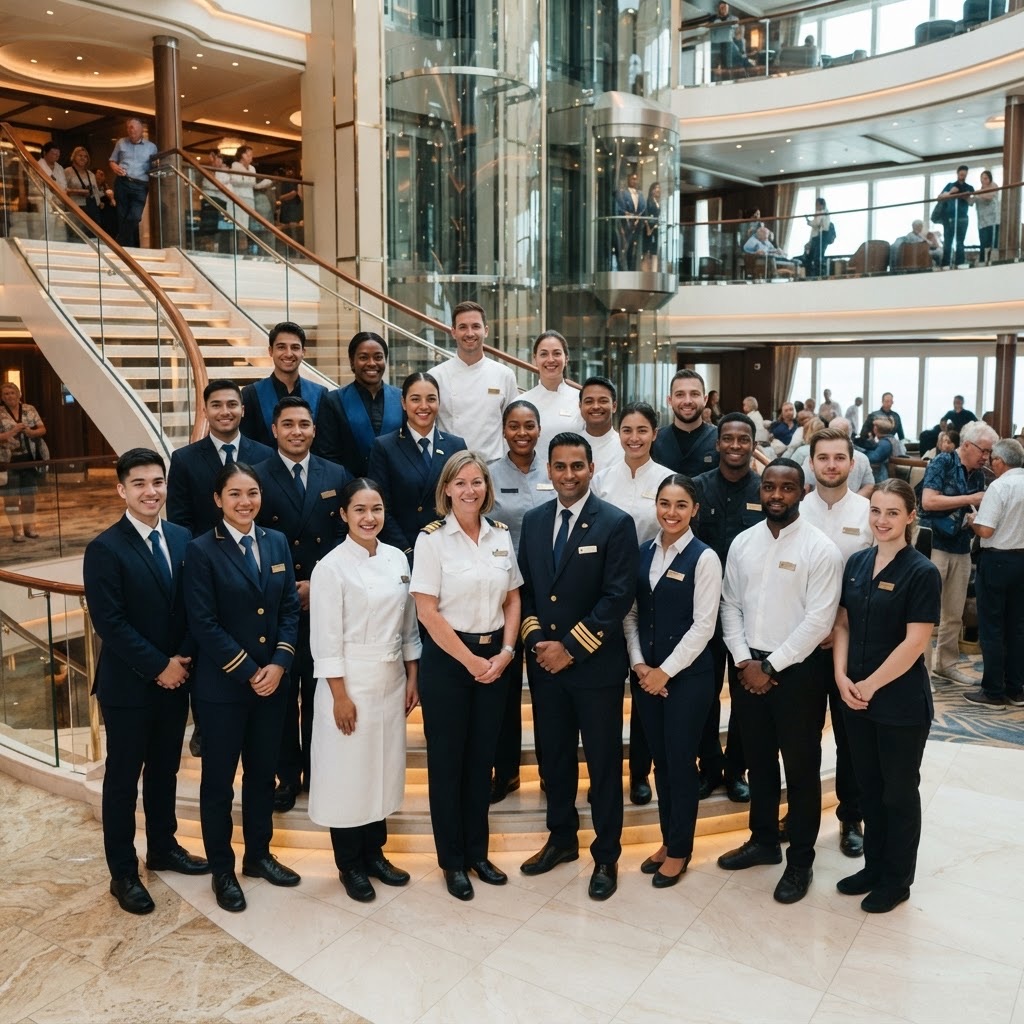
We hire on skill, certification, and character. Full stop. Nationality, gender, age, faith, and background never enter the equation. The crew we place reflects the diversity of the guests they serve, because a global industry deserves a global crew.
  • Any Nationality
  • Any Background
  • One Standard
A diverse ship's crew representing many nationalities

The Engine Behind Every Match

Compass AI

Your 24/7 cruise career assistant. Compass is your personal AI assistant throughout the recruitment journey, giving you fast, clear answers in your own language, and keeping you updated at every stage.

Cruise careers are living experiences. Choosing the right person requires human insight, emotional intelligence and lived experience, supported by Compass AI's data-driven accuracy.

What Compass Does For You

Answers questions about roles, contracts, life onboard and the hiring process.

Shows your application status and next steps.

Reminds you about documents, deadlines and requirements.

Provides role-specific interview guidance.

Escalates complex questions to a real recruiter.

Keeps you engaged and informed between touchpoints.

What Humans Bring

Understand what shipboard life actually feels like, not just what a job description says.

Read emotional intelligence, motivation and cultural fit in every conversation.

Coach candidates through nerves, doubts and unfamiliar processes.

Make the final call on every hire, never an algorithm alone.

Build the trust a contract at sea actually requires.

Compass narrows, matches and informs, but every final decision is made by a human who understands what a ship, and a life at sea, truly demands.

Careers at Sea

Roles We Crew

From the galley to the stage, the pool deck to the pursers' desk: Compass matches your skills to the roles cruise lines are hiring for, across seven onboard departments.

  • 7,293Candidate Applications

How It Works

Your Cruise Career Journey: From Application to Embarkation

Life Onboard

Life at Sea, Beyond the Job Title.

Ports, paychecks, and a passport full of stamps, plus a bunk, a galley, and a crew that has your back by week two. Here's what a contract at sea is really like.

A group of cruise ship crew members in uniform, from many different departments and nationalities, on a ship's atrium staircase

Knowledge Article

What Working on a Cruise Ship Is Really Like

Your commute might take a few minutes, along a corridor and up a flight of stairs. Outside, the ship could be approaching a port you have never visited. Whether you get to explore it today depends on your duties.

That is one of the first things to understand about working on a cruise ship: the itinerary and your working day are two different things.

There is plenty to look forward to, from meeting people from around the world to building experience in a busy international workplace. There are also long days, shared living spaces and months away from home. Before you pack your bags, it helps to picture both.

Your job shapes your life onboard

Two crew members on the same ship can have very different routines. Your department shapes your daily rhythm as much as your role does:

  • A restaurant team works around meal services.
  • Housekeeping follows the demands of cabin servicing and guest changeovers.
  • Entertainment staff organise their working time around rehearsals, activities and performances.

Your department matters as much as your destination when you are deciding whether a role will suit you.

Expect a working week that looks different from one ashore. Across the cruise industry, seven-day working weeks are standard, with daily hours depending on the position, and contracts commonly running from three to nine months. These are common expectations rather than a fixed rule for every cruise job, but they show why you need to ask about the actual schedule before accepting an offer.

Before accepting a role, ask:

  • How are shifts divided?
  • When do breaks happen?
  • How is rest managed?

A few hours between duties feels different from having a whole day to yourself.

Seafarers also have workplace protections. The Maritime Labour Convention covers matters including employment agreements, wages, work and rest, accommodation and medical care. Read your agreement and make sure you understand the arrangements that apply to your ship.

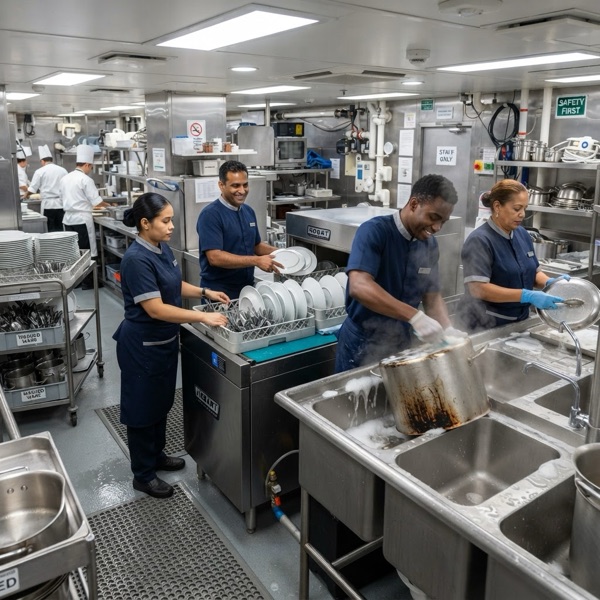
Crew members working together in a cruise ship galley

Your workplace is also your home

At the end of a shift, you are still onboard. That makes accommodation and the people around you a significant part of the experience.

Cabin arrangements vary by role and ship, so check whether you will share a cabin and bathroom. Onboard provisions commonly include:

  • Shared bathroom facilities
  • Meals
  • Crew recreation areas
  • Gym access

This varies between employers and ships, so it's a useful line of questions for any prospective employer.

In shared accommodation, small courtesies matter. Agree with your cabin mate on:

  • Alarms
  • Lights
  • Noise
  • Keeping the space tidy

If your cabin mate is sleeping before a late shift, headphones are a thoughtful investment.

The social side can be a real draw. You have opportunities to build friendships with people whose backgrounds, languages and experiences differ from yours. It's common for a single ship's crew to include dozens of nationalities, with some fleets reporting well over 100 across their operations.

You do not have to join every gathering to enjoy crew life. Give yourself permission to rest, read or spend some time quietly. Living close to your colleagues takes consideration, and knowing when you need space is part of that.

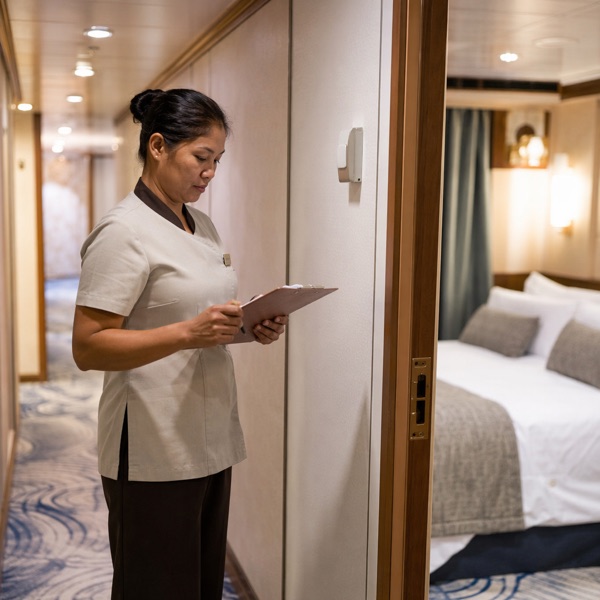
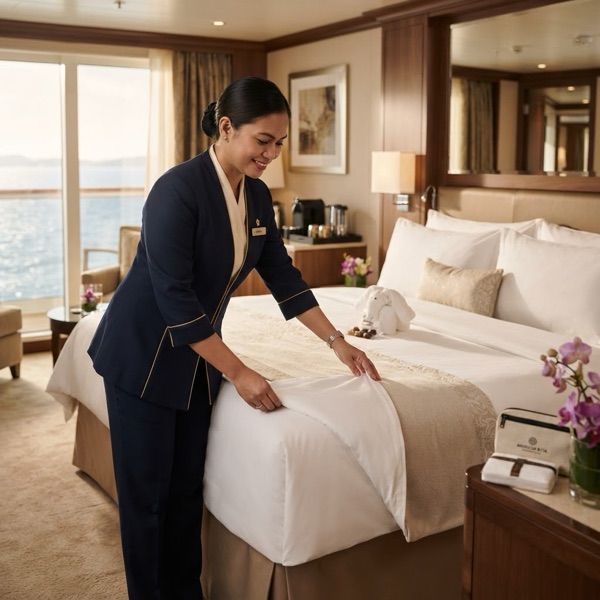
A crew member making up a cabin bed on board a cruise ship

Seeing the world happens around the job

Travel is a reasonable reason to be interested in cruise work. Just be specific about what you hope it will look like.

Time ashore depends on permission, your schedule and the ship's operational requirements. Most cruise lines allow crew to go ashore when they are off duty, while making clear that ship and itinerary assignments depend on business needs. A particular route is never guaranteed.

Think in terms of opportunities:

  • A walk
  • Lunch ashore
  • A chance to explore, when your free time allows

Avoid building your expectations around seeing every destination on the itinerary.

And there will be occasions when sleep is the more appealing choice. There is nothing wrong with that. You are living through a working contract, and you need enough energy for tomorrow.

Two crew members walking and talking on the deck of a cruise ship, ocean in view

Staying close to home takes some planning

Months away can mean missing birthdays, family meals and the ordinary conversations that keep you connected to people.

Internet access helps, but ask what is included and whether calls, video and extra data cost money. Seafarer wellbeing research consistently records mixed experiences with connectivity at sea, including reports of weak signals and limited access alongside cases of strong, reliable coverage. A reliable call home should not be something you simply assume will be available whenever you want it.

Before leaving, talk with the people closest to you about time zones and realistic contact times. A missed call should not become a source of worry because nobody discussed your schedule.

It is also sensible to find out where to turn onboard if you are struggling. Ask about:

  • Crew welfare
  • Medical services
  • Confidential support

You do not need to wait until something feels unmanageable to have that conversation.

Look closely at what you will take home

Accommodation and meals provided onboard can reduce some everyday expenses, and most cruise employers cover both for their shipboard employees.

That does not tell you how much you personally will save. Expenses at home may continue, and the details of your pay and contract matter.

Before accepting, get clear answers to these questions:

  • What pay is guaranteed, and what depends on tips or commission?
  • What deductions or personal expenses should I expect?
  • Who pays for travel, medical examinations and required documents?
  • How long is the assignment, and what are the pay arrangements between contracts?
  • What accommodation will I have?
  • What training and progression opportunities come with this role?

The experience itself deserves consideration too. A role that gives you useful training, responsibility and a supportive manager may serve your longer-term plans well. Ask what development looks like in practice, rather than relying on a general promise of career growth.

Working at sea asks you to adapt to a shared home, a demanding schedule and distance from familiar people. In return, it can offer travel, friendships and the satisfaction of doing your job as part of a large, closely connected team.

Take your time choosing. Ask the practical questions, read the answers carefully and think about the everyday routine as well as the destinations.

Curious about the roles your experience could suit?

Join the Crew List ⚓

Trust & Safety

Recruitment You Can Check, Not Just Trust.

Cruise careers are living experiences. Choosing the right person requires human insight, emotional intelligence and lived experience, supported by Compass AI's data-driven accuracy.

Every placement follows the Maritime Labour Convention and STCW certification requirements, and the Employer Pays Principle: candidates never cover the cost of their own recruitment.

If Someone Asks You to Pay: It Isn't Us.

The Talent Pack and Compass AI never charge a fee, ever, not for interviews, offers, paperwork or equipment, and never via gift cards, crypto or a personal account. Anyone who asks isn't part of our pack. Don't pay. Screenshot it and report it to us on WhatsApp.

Quick Answers

Do I have to pay anything to apply or to be placed on a ship?

No. The Talent Pack never charges candidates a fee at any stage: application, interview, offer, or deployment.

Is Compass a real person?

No. Compass is an AI assistant. It's built to give instant, honest answers, backed by real recruiters for anything it can't answer.

The Gangway Times

Real Stories. Real Insight. Straight From the Water.

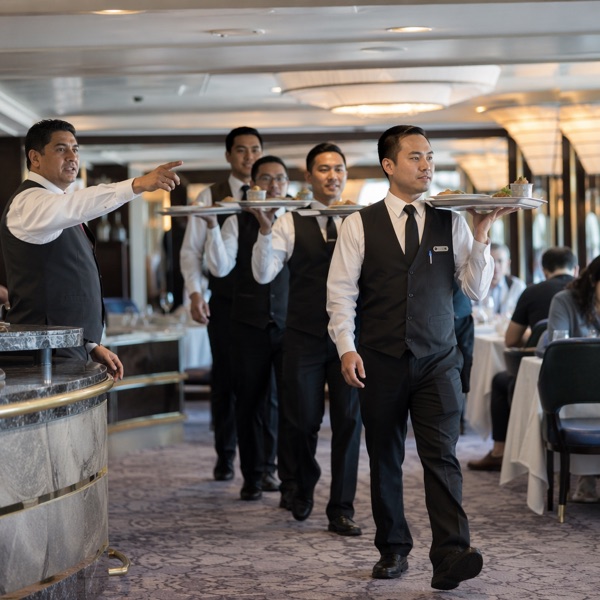
A line of waiters carrying plated dishes through an elegant cruise ship dining room

Feature Story

The Magic of Dining at Sea

Picture the dining room twenty minutes before the doors open. Tablecloths are pressed and squared to the millimetre. Wine glasses catch the light in neat rows. Next door in the galley, pans are already moving, and the pass is starting to fill with the first plates of the night. No guest has walked in yet, and the service has already begun.

That's the part guests never see. It's also the part that makes dining at sea genuinely skilled work.

It starts long before the first guest sits down

Every dinner service onboard is really two services happening at once: what the guest experiences, and everything the team does to make that experience look unplanned. Briefings run through the evening's specials, dietary requirements, returning guests and any special occasions: a birthday, an anniversary, a first proper night out after a long day at sea. Tables are set, sections are assigned, and the pass between galley and floor is tested until the timing feels automatic.

By the time the first guest sits down, the restaurant team has already made a hundred small decisions on their behalf.

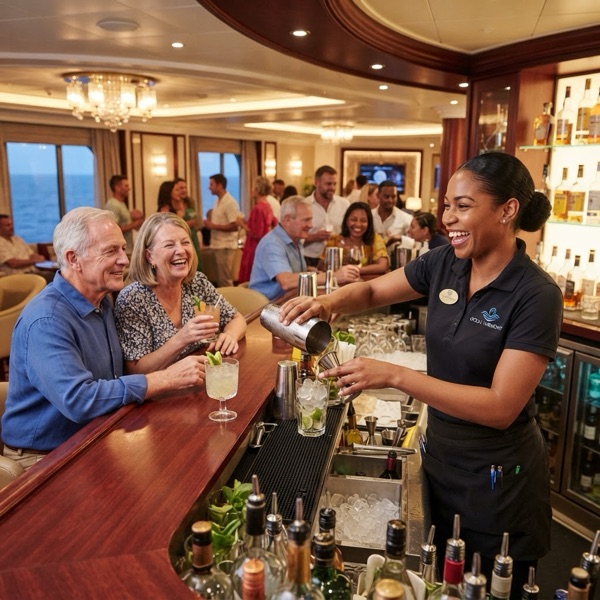
A beverage server carrying a tray of drinks through the ship's lounge, tables and seating visible across the room

Reading the room, one table at a time

Good hospitality at sea isn't about following a script. It's about reading each table differently. A couple who want to talk uninterrupted need a different rhythm to a family of six celebrating a big trip. Remembering that a guest prefers still water, or that someone likes their sauce on the side, turns a meal into something that feels personal in a room serving hundreds of covers a night.

That's the skill that separates good service from service people remember: noticing, adjusting, and doing it smoothly enough that the guest never sees the adjustment happen.

A team sport, plate by plate

None of it works alone. Chefs, waitstaff, sommeliers, bar and galley stewards are all reading off the same rhythm, course by course, table by table. A plate leaving the galley a minute early or late can throw off an entire section, which is why communication between the floor and the kitchen matters as much as anything happening in either room individually.

Under the Food & Beverage umbrella, that teamwork spans a wide range of roles:

  • Dining room and bar service
  • Culinary and galley positions
  • Sommeliers
  • The guest-facing hosts who set the tone the moment someone walks in

Every role depends on the others running well.

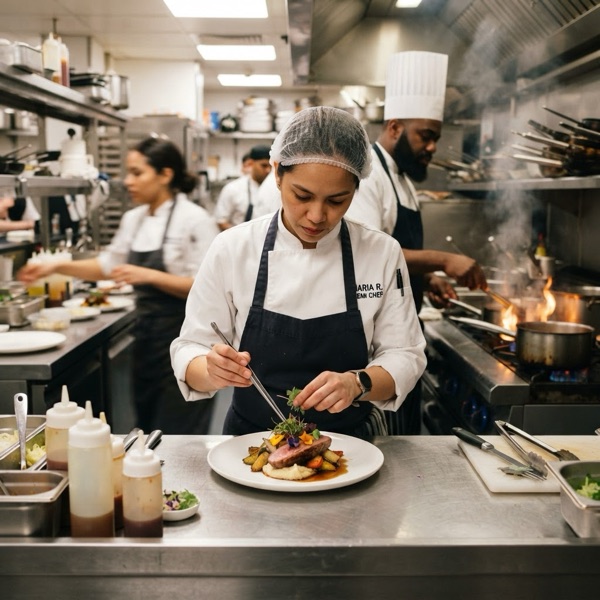
A demi chef carefully plating a dish alongside colleagues cooking in a busy cruise ship galley

Why people build careers in this department

F&B is one of the busiest departments on any ship, and one of the most transferable. The skills built here (composure under pressure, genuine hospitality, teamwork with people from a dozen countries in the same section) carry directly into five-star hotels, events and restaurants ashore, for those who eventually want to head that way. For others, it becomes a career at sea in its own right, moving from the floor into supervisory and management roles as experience builds.

Either way, it starts the same: learning to make a room full of strangers feel looked after, service after service.

Curious whether F&B is your department?

Join the Crew List ⚓
Galley stewards washing dishes and clearing pots in a cruise ship kitchen

Feature Story

From Galley Steward to Sous Chef: One Career at Sea

Every sous chef onboard started somewhere, and for most, it started exactly where you'd expect: at the bottom of a very busy galley, with a mountain of prep ahead of them and a lot to learn.

Here's what that climb actually looks like, rank by rank.

Where it starts: galley steward

Your first contract in the culinary department is rarely about cooking: it's about everything that makes cooking possible.

  • Deep cleaning
  • Dishwashing
  • Stock rotation
  • Keeping a kitchen that's feeding thousands of meals a day running to hygiene standards that don't bend

It's demanding, unglamorous work, and it teaches two things fast: discipline, and the rhythm of a professional kitchen under real volume. Chefs notice who shows up switched on for that.

A senior chef guiding a commis chef through plating a dish in a cruise ship galley

Finding your section: commis chef

Prove yourself as a steward and the next step usually lands you at a station (sauces, garde manger, pastry, grill), working directly under a more senior chef. This is where technique starts to matter: knife skills, timing, consistency, and learning to repeat a dish exactly the same way on your two-hundredth cover as your second. Commis chefs are still learning constantly, but now they're part of the actual cooking, not just the machinery around it.

A chef de partie flambeing a dish alone at his station in a cruise ship galley

Building your name: chef de partie

Run your section well for long enough and you'll be trusted to run it alone. A chef de partie owns a station outright: accountable for its prep, its output and its consistency through a full service, often training the commis chefs coming up behind them. This is usually where a cruise ship kitchen starts to feel less like a job and more like a career: you have a reputation to build, and colleagues who rely on you doing your part of the pass properly, every night.

A sous chef directing plating and coordinating with the team during dinner service

Leading the shift: sous chef

By sous chef, the job has changed shape. You're no longer responsible for just a station. You're responsible for the whole service running smoothly, supporting the executive chef, coordinating between sections, training junior chefs and stepping in wherever the kitchen needs a steady head. It's a leadership role built on years of having done every job below it, which is exactly why it can't be shortcut.

What actually moves you up the ladder

Talk to chefs who've made this climb and the same themes come up:

  • Reliability matters more than raw talent. Kitchens remember who they can count on under pressure.
  • Learn the sections you don't work. Understanding the whole pass, not just your corner of it, is what makes someone promotable.
  • Take certifications seriously. Food safety and hygiene qualifications aren't paperwork. They're what let a head chef trust you with more.
  • Ask for feedback, not just approval. The chefs who improve fastest are the ones who want to know what wasn't good enough, not just what was.

One more thing worth knowing before your first contract: under a genuine Employer Pays Principle, you shouldn't be paying recruitment fees to get in the galley door in the first place. That cost sits with the employer, not the crew member climbing towards their whites.

Ready to start climbing?

Join the Crew List ⚓
Entertainment crew building a set piece backstage before a show

Feature Story

Behind the Show: Entertainment Crew Life

By the time guests are choosing their dinner table, the entertainment team has usually already run through tonight's show twice, fixed a costume zip, reset the sound levels in the theatre, and hosted trivia in the atrium.

The lights go up looking effortless. Getting there rarely is.

More roles than the marquee suggests

"Entertainment" undersells how wide this department actually runs. It covers:

  • Performers and vocalists
  • Dancers
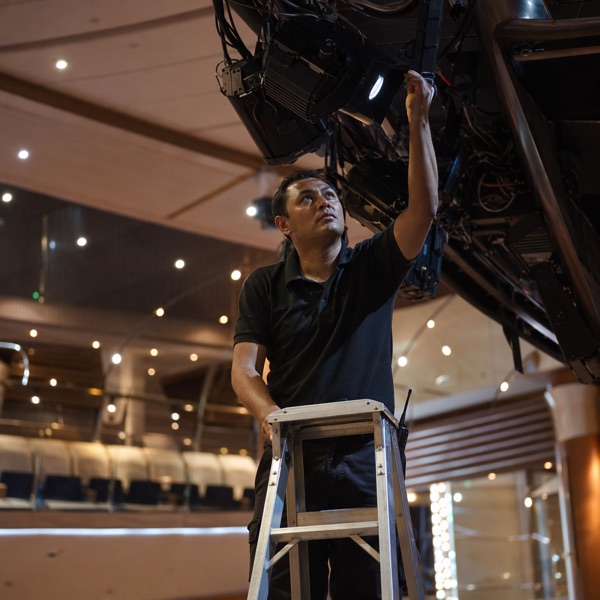
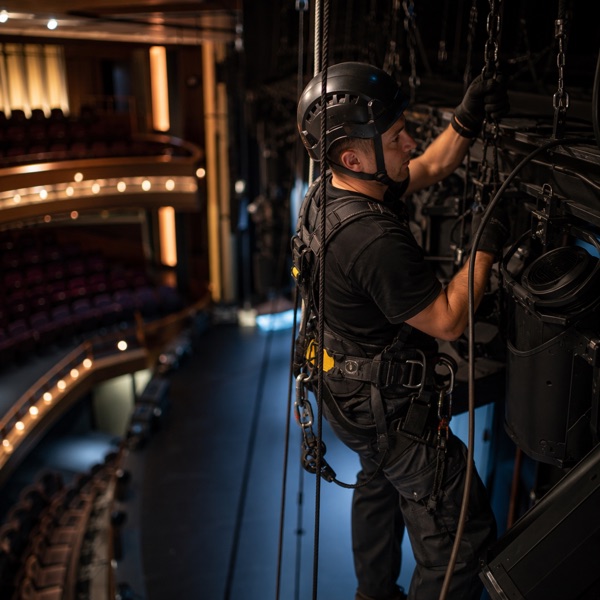
  • Technical and production crew running the lighting and sound behind the scenes
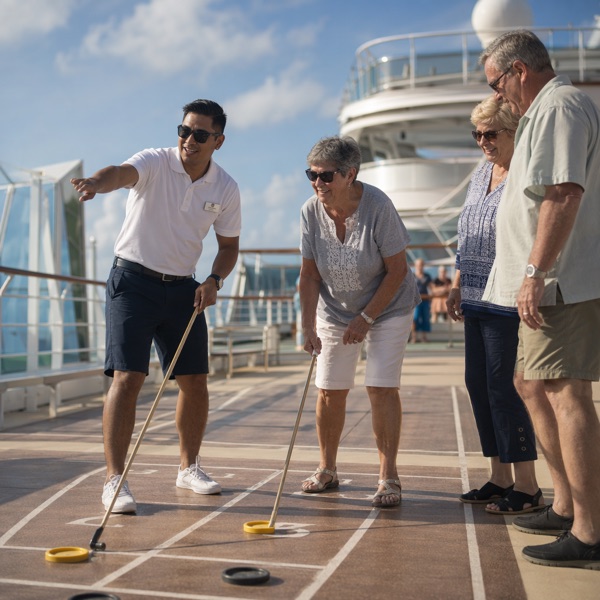
  • Cruise staff and activity hosts who run the games, trivia and deck parties
  • The guest-facing hosts who keep the daily programme moving

Some of these roles are on stage every night. Others never are, and the show wouldn't happen without them.

A theatre technician adjusting a lighting fixture at the AV rack, with the full stage and seating visible beyond her

A day that runs in two acts

Mornings and afternoons are rehearsal, prep and hosting: blocking a scene, running lines, teaching a dance class by the pool, or keeping an activity on schedule so the next one can start on time.

Evenings shift into performance mode: a production show, a themed party, a late-night quiz. The same people who spent the afternoon hosting trivia are now expected to bring full energy to a stage or a dance floor. It's a job that asks you to be "on" for a lot of the day, in different ways each time.

A cruise host presenting to a laughing audience in a ship's lounge

Performing for a different audience every week

Land-based entertainment work usually means learning a room once. At sea, the room changes with every voyage: a new group of guests, a new mix of ages and nationalities, a different energy on a wet sea day than a sunny port day.

Reading that shift quickly, and adjusting a show or a hosting style to match it, is a skill in itself. So is doing it with genuine warmth on the tenth night of a contract, not just the first.

The skills that travel with you

People join entertainment departments for the stage time, but they tend to leave with more than that:

  • Public speaking under real pressure
  • Event hosting
  • Quick problem-solving when a mic cuts out mid-song
  • Teamwork with a genuinely international cast and crew

Those skills carry well into events, hospitality, television and performing arts careers ashore, for the crew who eventually want to go that way. Plenty of others build their whole career at sea, moving from performer or host into entertainment management over successive contracts.

Either way, it starts with the willingness to walk out and do the show anyway, even on the nights you'd rather not.

Curious where you'd fit in the cast?

Join the Crew List ⚓
Coming Soon

Crew Stories

Sailed with us? We'd love to feature your story here. Get in touch via WhatsApp once you're onboard.

Get In Touch

Contact Us

Crew Support

Need help with your application, documents or interview preparation? Our team is here to support you at every stage of your cruise career journey.

Email: crew@thetalentpack.com

Compass AI: Coming Soon

Cruise Partner Support

Looking to hire exceptional talent across APAC? Our recruitment specialists and Compass AI provide fast, structured support for your hiring needs.

Email: hiringpartner@thetalentpack.com

Compass AI: Coming Soon

Chat on WhatsApp